Bitcoin Lightning wallets compared: which one fits your needs

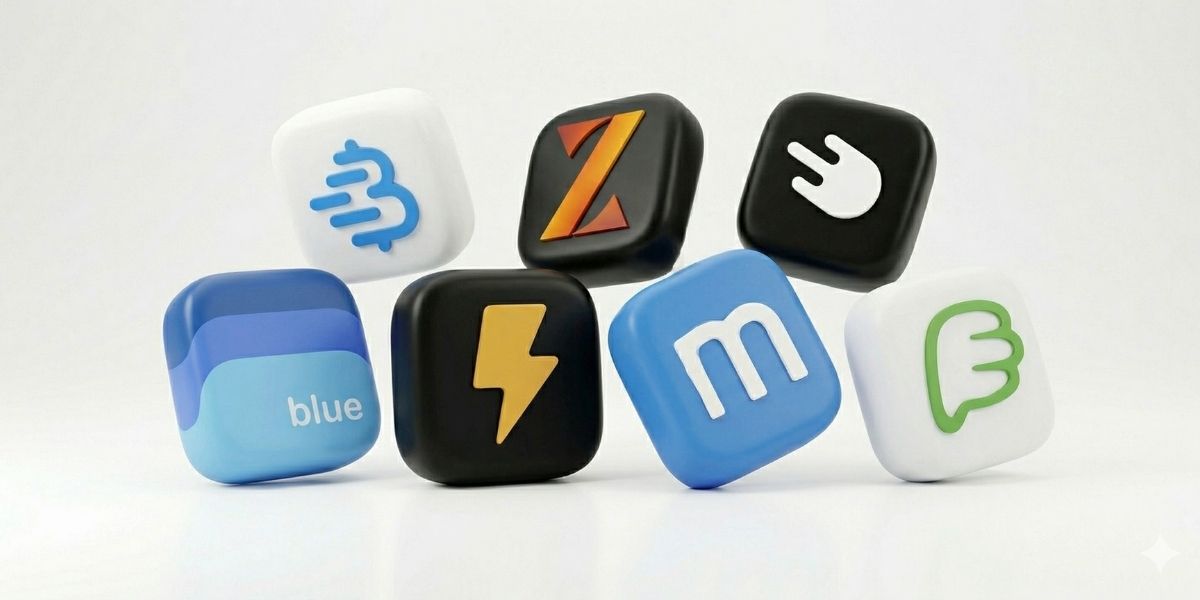
The honest answer: it depends on what you're actually trying to do. Some wallets are built for beginners who just want to pay with BTC without touching a single technical setting. Others give you full control over your node, your channels, your keys. Most fall somewhere in between.
Here's what you need to know about the wallets worth your time and how to figure out which one fits where you are right now.
Custodial vs. non-custodial: the one thing you need to understand first
Before comparing wallets, you need to know the difference between these two types.
A custodial wallet means a company holds your Bitcoin on your behalf. You don't control the private keys, they do. It's simpler to use, but you're trusting that company not to get hacked, go bust, or freeze your account. Think of it like a bank account for BTC.
A non-custodial wallet means you hold your own keys. No company can take your funds or lock you out. The tradeoff: you're responsible for keeping your backup phrase safe. Lose it, and your funds are gone.
For most people moving BTC out of cold storage for everyday spending, non-custodial is the better default. For a complete beginner who wants to try Lightning without any technical lift, custodial is a reasonable starting point, as long as you keep the balance small.
7 Bitcoin Lightning wallets worth your time
1. Phoenix
Best for: Cold storage holders moving funds to Lightning for the first time
Phoenix is made by ACINQ, a Paris-based Bitcoin technology company founded in 2014. ACINQ is one of the three teams that originally built the Lightning Network protocol, they run one of the largest Lightning nodes in the world, with over 1,700 channels and more than 412 BTC in capacity.
Phoenix is their consumer wallet, and it shows. It's non-custodial, you hold your keys, but it manages all the complicated Lightning infrastructure (channel opening, channel liquidity, routing) automatically. You don't need to know what any of that means to use it. You fund the wallet, and it works.
The wallet runs natively on Lightning, available for iOS and Android. A 12-word seed phrase backs everything up. If you lose your phone, you recover everything.
What it costs: Phoenix charges a small fee to open or resize your payment channel, and a percentage on incoming transactions above your current channel capacity. These are clearly shown before you confirm anything.
One thing to know: Phoenix pulled out of US app stores in 2024 due to regulatory pressure. If you're in the US, look at Breez or Zeus instead.
Why it fits the cold storage holder: You already understand self-custody. Phoenix gives you the same principle on Lightning, your keys, your coins, without making you learn channel management.
2. Wallet of Satoshi
Best for: Complete beginners who want Lightning working in under two minutes
Wallet of Satoshi is an Australian company and the most downloaded Lightning wallet in the world. It's custodial, they hold your keys, but it's also genuinely the easiest Lightning wallet that exists. Download, open, done. You're on Lightning.
No seed phrase to write down. No channels to manage. No configuration. The tagline on their website is "so easy your mum could use it" and they're not wrong.
It's available in over 170 countries, supports both Lightning and on-chain Bitcoin, and lets you view nearby merchants who accept Lightning payments. The most recent app version (3.2.0) shipped in late 2025.
What it costs: Receiving Lightning payments is free. Sending has variable network fees. On-chain top-ups charge 1%.
One thing to know: Because it's custodial, you're trusting Wallet of Satoshi with your funds. Don't use it as a primary wallet or store large amounts on it. It's a spending account, treat it like the cash in your physical wallet.
Why it fits the first-time buyer: Zero friction. You're not learning how Lightning works, you're just using it.
3. Breez
Best for: Users who want self-custody and a full-featured app without running their own node
Breez was founded in 2018 in Tel Aviv by Roy Sheinfeld, who describes the company as having launched "just when the first mainnet transactions appeared on the Lightning Network." In 2025 it was named one of the world's top fintech startups by CB Insights. The company has raised $11M and has contributors from across Europe and beyond.
What makes Breez different from most non-custodial wallets is how much it packs in beyond basic payments. There's a built-in point-of-sale terminal for merchants, a podcast player that lets you stream micropayments to creators as you listen, and a debit card option. It also has one of the cleanest interfaces in the Lightning space.
Breez runs a full Lightning node on your phone, you don't connect to someone else's. Channel management is automatic. A backup goes to your cloud storage (Google Drive or iCloud).
What it costs: A one-time fee (0.4% minimum) for automatic channel creation when you first receive funds. After that, only standard Lightning routing fees.
Why it fits the cold storage holder who wants to spend: Breez is where the non-custodial principle meets real daily utility. You can move BTC off cold storage, load it to Breez, and spend it on gift cards, subscriptions, and anything else that accepts Lightning, without ever giving up custody.
4. Strike
Best for: Users who want Lightning payments without dealing with Bitcoin directly
Strike launched in January 2020, founded by Jack Mallers, a Chicago-based developer who had been building Lightning infrastructure since 2017. Since its launch, Strike has raised $80M+ and expanded to over 100 countries. Mallers is also known for his role in helping El Salvador make Bitcoin legal tender in 2021, where Strike was used to facilitate free cross-border remittances.
Strike takes a different approach to every other wallet on this list. It's not really a Bitcoin wallet at all, it's a payments app that uses Lightning under the hood. You can fund Strike from a bank account or debit card, make Lightning payments, and have the whole thing settle in your local currency. Bitcoin is the invisible rail, not the thing you're managing.
This makes Strike particularly useful for sending money internationally, fast, low-fee, borderless. It also means it's custodial and requires identity verification (KYC).
What it costs: No fees on Bitcoin purchases or Lightning payments. On-chain fees where applicable.
One thing to know: Strike is custodial and requires ID verification. It's not for anyone prioritizing privacy or self-custody.
Why it fits the first-time buyer: If your goal is to participate in the Lightning economy without learning about wallets, keys, or channels, Strike removes almost all of the friction. You connect your bank account and you're done.
5. Zeus
Best for: Advanced users who run their own Lightning node or want full control
Zeus is a non-custodial Bitcoin wallet focused on maximum user sovereignty. It's named after the Greek god of thunder, fitting for a Lightning wallet. The project has been around since the early Lightning era and is developed and maintained by Evan Kaloudis.
Originally built for users who already ran their own Lightning node (LND, Core Lightning, Eclair) and wanted a clean mobile interface for it, Zeus evolved significantly with its 0.8 release. It now includes an embedded Lightning node powered by OLYMPUS, its own Lightning Service Provider, which means you can run a full self-custodial Lightning node from your phone without any external infrastructure.
Zeus offers channel management tools, privacy options, Tor support, and signing capabilities that no other mobile wallet matches.
What it costs: Standard Lightning network fees. OLYMPUS charges for channel opening services.
One thing to know: This is not a beginner wallet. The interface exposes technical detail that most users don't need and won't understand. If you've never opened a Lightning channel before, start with Phoenix or Breez and come back to Zeus when you're ready.
Why it fits the cold storage holder: If you've already been managing your own hardware wallet, you understand self-custody. Zeus extends that principle all the way down to the Lightning layer, nothing is managed for you by a third party.
6. Blue Wallet
Best for: Users who want one app for both on-chain Bitcoin and Lightning
Blue Wallet launched in 2020 out of Barcelona, Spain, and has become one of the most respected open-source Bitcoin wallets in the space. It covers both on-chain Bitcoin and Lightning in a single, well-designed app.
For Lightning, Blue Wallet offers flexibility: you can use their hosted Lightning service (custodial, simple) or connect it to your own Lightning node via LNDHub (non-custodial, technical). This makes it one of the most versatile wallets on the list, a beginner can start with the hosted option and graduate to self-custody as they learn.
Other standout features include multisig vault support, watch-only wallets, transaction batching, and a built-in marketplace. The open-source codebase is actively maintained and audited by the community.
What it costs: The hosted Lightning wallet has no extra fees beyond standard Lightning routing. Running your own LNDHub instance is free.
One thing to know: If you're using the hosted Lightning option, it's custodial, Blue Wallet holds your Lightning balance. For self-custody on Lightning, you need to connect your own node.
Why it fits both audiences: Beginners can start custodial and switch to self-custody without changing apps. Cold storage holders who already run a node can connect straight to it.
7. Muun
Best for: Users who want a single balance for on-chain and Lightning without thinking about layers
Muun is a non-custodial Bitcoin wallet that takes a uniquely simple approach: there's one balance, one wallet. You don't choose whether to send on-chain or via Lightning. Muun figures it out based on the invoice and the recipient. It supports both, and it handles the switching invisibly.
This is unusual. Most Lightning wallets require you to manage two separate balances or at least be aware of which layer you're using. Muun removes that entirely.
The tradeoff is its fee structure. Because Muun routes Lightning transactions through on-chain swaps (a technical approach called submarine swaps), fees can be higher than pure Lightning wallets particularly for small payments. If you're making lots of small Lightning payments, Phoenix or Breez will cost you less.
Muun secures your wallet with a 2-of-2 multisig backup, and recovery works via a combination of email and a recovery code, no seed phrase required in the traditional sense. It's available on iOS and Android.
What it costs: Fees vary and can be higher than other Lightning wallets on small transactions due to the submarine swap architecture.
Why it fits the first-time buyer: The single-balance approach removes one of the most confusing parts of using Lightning for a new user. You don't need to understand the network layer, you just pay.
How to choose
Once you have Lightning BTC, here's what you can spend it on
Getting Lightning set up is only half the story. The other half is actually using it because the biggest advantage of Lightning over on-chain BTC is that the fees are low enough to make small, everyday purchases practical.
On Cryptorefills, you can spend Lightning BTC directly on:
- Gift cards for hundreds of global brands, from streaming services to gaming platforms to retailers
- Mobile top up - add credit to a phone number in over 150 countries, instantly
- eSIM - get a data plan for travel without going near a carrier store
- Flights and stays - book flights and hotel accommodation around the globe
No KYC. No waiting. You pay with Lightning, the brand delivers.