Toncoin rebrands to Gram

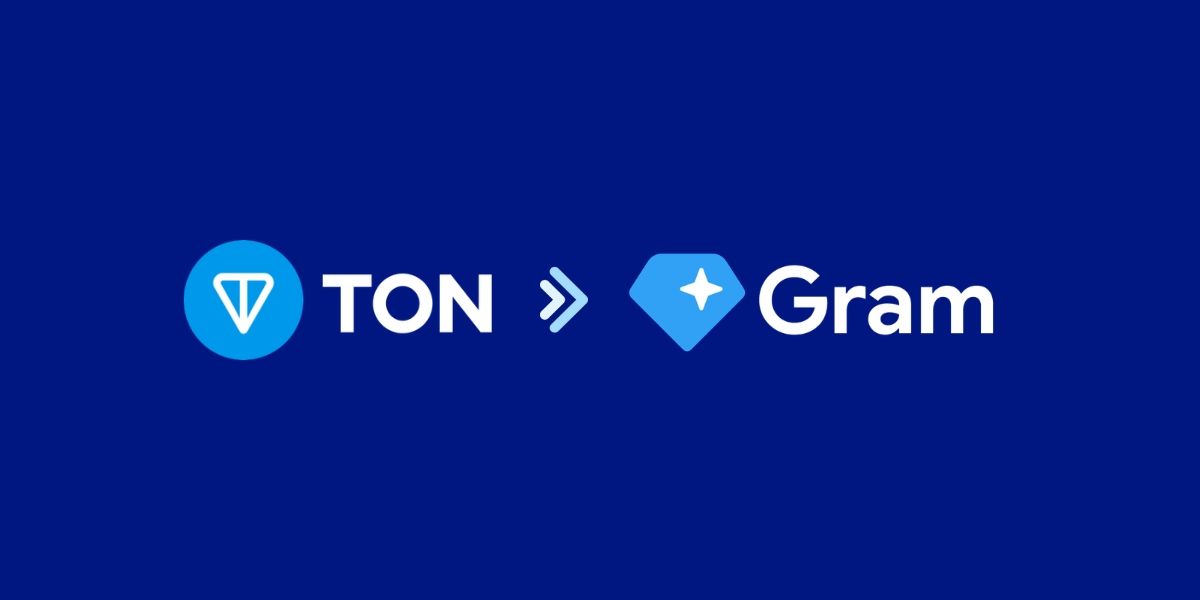
On June 1, 2026, Pavel Durov announced that Toncoin (TON), the native currency of The Open Network, would be renamed Gram (GRAM). The rebrand restores the name the token carried in Telegram's original 2018 white paper, before a SEC enforcement action forced the project into a six-year detour under a different identity.
This is the fourth step in Durov's MTONGA roadmap, short for "Make TON Great Again," a seven-step initiative launched in April 2026. Three steps remain undisclosed. The three that preceded this one are already live: a 6x block rate increase that brought sub-second transaction finality (step 1), a sixfold fee cut to roughly $0.0005 per transaction (step 2), and Telegram replacing the Switzerland-based TON Foundation as the network's primary steward and largest validator (step 3).
What the GRAM rebrand changes
Gram was the original name of the token in TON's first whitepaper. TON remains the name of the blockchain while the token is now GRAM.
The underlying network is unchanged. Addresses remain valid. Staking positions carry over. Smart contracts, NFTs, DeFi positions, and every token balance convert at a fixed 1:1 ratio. There is no migration to initiate, no bridge to use, no claim to submit.
What changes is naming and display. The ticker shifts from TON to GRAM across wallets, exchanges, explorers, and applications. Exchanges update on their own schedules during the three-week transition window. Some platforms suspended TON trading as of June 15, 2026, with GRAM listings resuming around June 23, 2026. Checking your exchange's specific timeline before placing trades during this window is worthwhile.
The strategic structure also shifts. TON as a name now refers exclusively to the blockchain layer, The Open Network. GRAM refers exclusively to the asset. That separation clarifies messaging for Telegram's roughly 950 million monthly active users who are less likely to distinguish between a network name and a token name when encountering crypto for the first time inside a chat app.
The Telegram angle: why this is important for 950 million users
The MTONGA roadmap is not primarily a technical program. Steps 1 and 2 were infrastructure, but steps 3 and 4 are positioning moves. Telegram taking over as the largest validator centralises network control around the platform that hosts almost a billion users. Renaming the token Gram closes the loop: the asset now carries the same brand identity the project had when Telegram designed it for its own users in 2018.
Telegram Mini Apps already run on the TON network. Payments via the Telegram Wallet use it. As those integrations deepen, the argument for Gram as an in-app currency becomes more coherent.
The risk attached to that logic is concentration. Telegram controlling both the validator infrastructure and the dominant user distribution channel for GRAM creates a dependency that other Layer 1 networks do not have by design. Steps 5 through 7 of MTONGA remain undisclosed, and whether they address that concentration or deepen it is an open question.
What GRAM holders and users should do right now
If your TON is held on a centralized exchange, the migration is handled automatically. Your balance will be reflected as GRAM once the exchange completes its own rollout. Check your platform's specific announcement for the exact trading suspension and resume dates in your region.
If your TON is held in a self-custody wallet such as Tonkeeper or TON Space, the wallet interface will update its display to reflect the GRAM ticker as the transition rolls out. The underlying keys and addresses are unchanged. Your funds are not at risk from the rebrand itself.
If you use TON on Cryptorefills to buy gift cards, mobile top-ups, or eSIMs, the payment flow operates on The Open Network (TON) layer, which is unchanged. Cryptorefills currently accepts TON-network payments across its catalog of 6,600+ brands in 180+ countries, and will update ticker references as the rename propagates. The assets you hold spend the same way post-rebrand as they did before.
If you're spending GRAM (or TON during the transition) on gift cards, the process on Cryptorefills works the same as any other supported network: select your product, choose TON/GRAM at checkout, and send from your wallet. You can pair this with stablecoins like USDC or USDT on other chains if you prefer not to spend a volatile asset directly. For a broader look at spending crypto on real products, the guide to buying Visa gift cards with crypto covers the prepaid card options available across multiple networks.
Frequently asked questions
- After the rebrand, TON refers to the blockchain network (The Open Network) and GRAM refers to the native token that runs on it. Previously, TON was used as both the network name and the token ticker. The rebrand separates the two identities. The blockchain architecture, addresses, and transaction history are unchanged, only the token's display name and ticker symbol change.
- No action is required. The conversion is 1 TON = 1 GRAM and happens automatically. If you hold TON on a centralised exchange, the platform handles the transition. If you hold TON in a self-custody wallet, the wallet will update its display as the rebrand rolls out. There is no token swap contract, no bridge, and no claim process.
- Gram was the original name Telegram assigned to the native currency in its 2018 white paper, before the SEC forced the project to shut down. Pavel Durov announced the rename as the fourth step in his MTONGA roadmap, framing it as a return to the project's original identity. Reviving the name also signals that Telegram believes the current regulatory environment supports reclaiming the brand without inheriting the legal liability from the 2020 SEC settlement.
- MTONGA stands for Make TON Great Again, a seven-step plan Durov launched in April 2026 to scale The Open Network as a payment and application layer for Telegram's users. Four steps have been completed: a 6x block rate upgrade delivering sub-second finality (step 1), a sixfold reduction in transaction fees to approximately $0.0005 (step 2), Telegram becoming the network's largest validator and replacing the TON Foundation (step 3), and the Toncoin-to-Gram rename (step 4). Steps 5, 6, and 7 have not been publicly disclosed.
- Yes. Cryptorefills accepts payments on The Open Network for its catalog of 6,600+ brands across 180+ countries. The rebrand affects the token's display name and ticker, not the underlying network. Payment flows remain operational during the transition window. The ticker reference at checkout will update to GRAM as the rename propagates across integrations.
- In 2019, the SEC obtained an emergency court injunction blocking Telegram from distributing Gram tokens, ruling that the 2018 private token sale constituted an unregistered securities offering. Telegram raised approximately $1.7 billion in that sale. By May 2020, Telegram settled the case, paid an $18.5 million penalty, and shut down the Telegram Open Network project entirely, refunding investors. Independent developers subsequently revived the codebase as The Open Network and renamed the token Toncoin to distance it from that legal episode.
- GRAM runs on The Open Network, which after the Catchain 2.0 upgrade offers sub-second transaction finality and fees of approximately $0.0005 per transaction. For small purchases like gift cards and mobile top-ups, those economics are competitive with other low-fee networks such as Solana and Base. The primary distinguishing factor is Telegram's distribution: GRAM is the native asset of the wallet built into a messaging app with roughly 950 million monthly active users, which creates a user base that other Layer 1 networks reach through separate wallet applications instead. For a comparison of how other networks perform for gift card purchases, the guide on spending SOL on gift cards covers Solana's options in detail.
- Most major exchanges are handling the transition automatically over the three-week window that began in early June 2026. Some platforms suspended TON trading on June 15, 2026 and plan to resume under the GRAM ticker around June 23, 2026. Others are completing the rename without a trading halt. The specific timeline varies by platform, so checking your exchange's announcement page before trading during the transition period is advisable.
- Most major exchanges are handling the transition automatically over the three-week window that began in early June 2026. Some platforms suspended TON trading on June 15, 2026 and plan to resume under the GRAM ticker around June 23, 2026. Others are completing the rename without a trading halt. The specific timeline varies by platform, so checking your exchange's announcement page before trading during the transition period is advisable.